Request a PDF of the dissertation here.
ABSTRACT
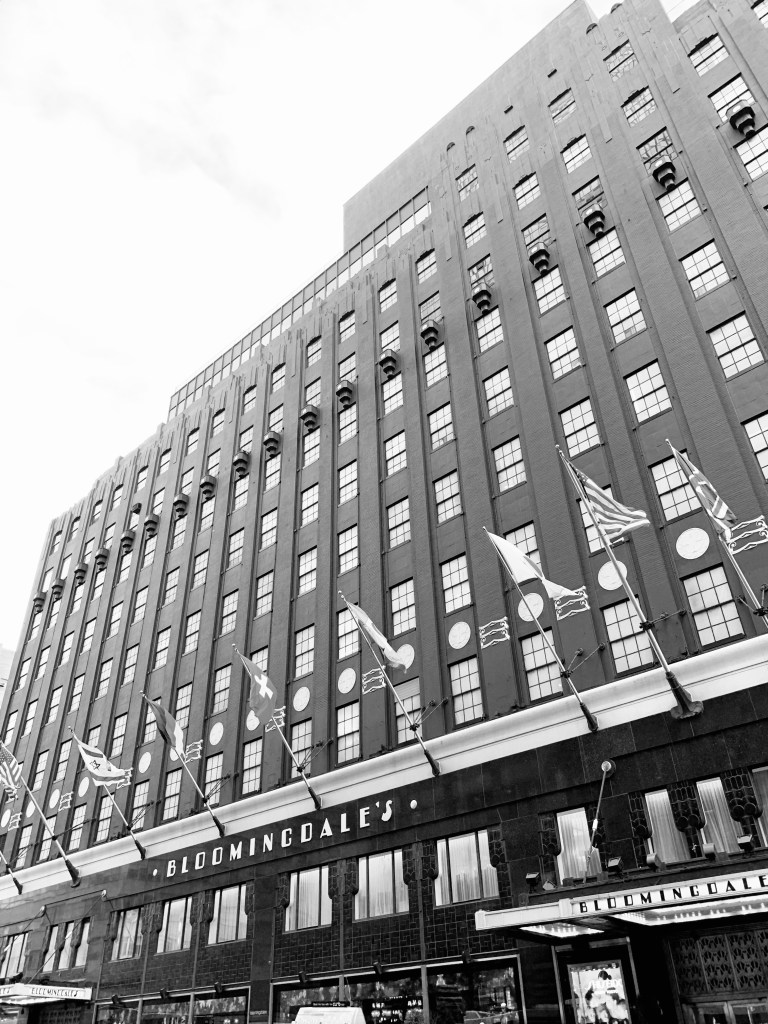
In mid-March 2020, the global pandemic of COVID-19, also known as coronavirus, caused a global disruption that forced the temporary closures of retailers across the globe. Department stores were already facing a set of challenges, but coronavirus accelerated the trends contributing to the decline of American department stores. This dissertation compares and contrasts how two department stores—Bloomingdale’s in New York, NY in the United States and Galeries Lafayette in Paris, France—approached their social media marketing strategies during the temporary store closures caused by coronavirus. Using pre-existing research on distributed cognitive theory and definitions of value from the consumer perspective, this dissertation analyzes each department store’s activities through a new contextual value framework that brands can use to understand how they can deliver value to their consumers, therefore better positioning themselves within their consumer’s context.
METHODOLOGY
The study tracked the Instagram accounts of Bloomingdale’s and Galeries Lafayette over a 12-week period from the week of March 9, 2020 through the week of May 25, 2020. Each Instagram post was analyzed and assigned one or more value categorizations.
The national context of each department store, the United States and France, were also tracked during the 12-week period.
Additional research methods included in-depth interviews with industry experts and a general survey sample.
KEY TAKEWAYS
- Findings from in-depth interviews are not optimistic about American department stores. Because department stores are rooted in brand heritage and history, they are much more susceptible to complacency and a sense of tradition that may hinder their ability to adapt in the current retail environment. However, one significant differentiation between Bloomingdale’s and Galeries Lafayette is the industry recognition that the French department store is a cultural institution in its home country and the extent to which it is deeply embedded within France. Experts agreed that Both Bloomingdale’s and Galeries Lafayette have international recognition, but Galeries Lafayette has been more successful using its brand heritage as an asset.
- Bloomingdale’s and Galeries Lafayette approached their Instagram content strategies quite differently, just as their respective countries handled coronavirus differently—Bloomingdale’s attempted to pivot their Instagram content to provide an escapist value to their American consumers’ context while Galeries Lafayette’s content demonstrates a high level of contextual value literacy #StayAtHomeWithGL
Although the survey results reflect that Bloomingdale’s Instagram content resonated more strongly with survey participants, there are significant flaws in the survey’s sample and method of data collection. Because the survey targeted American consumers—mostly individuals from the northeastern region of the United States who are much more likely to identify with Bloomingdale’s Instagram content—the absence of representation of French or international consumers who would be more familiar with Galeries Lafayette’s content does not give a fair comparison.
Bloomingdale’s
97
Number of Instagram posts during 3/9/20 – 5/31/20
56.7
Percentage of Instagram posts categorized as “customer-focused”
25.8
Percentage of Instagram posts categorized as “helpful”
Galeries Lafayette
45
Number of Instagram posts during 3/9/20 – 5/31/20
80
Percentage of Instagram posts categorized as “customer-focused”
51.1
Percentage of Instagram posts categorized as “helpful”
Author’s note
I had several ideas for my dissertation topic—live-tracking department stores’ Instagram accounts during a global pandemic certainly was not one of them.
Through Spring 2020, I spent a lot of time tuning into industry webinars and observing how brands were reacting under the stay-at-home orders and temporary store closures. Several conversations emphasized how brands in the fashion industry needed to use the shutdown period as an opportunity to rewrite their narrative.
If done correctly, the groundwork would help brands in order to survive through COVID-19 and beyond. The solutions would be different for each brand, yet all brands needed to rethink their value propositions. I found myself questioning the definition of value.
The value of the American department store was already in question before COVID-19—to analyze the system alongside an international counterpart that seemed to have a stronger value proposition seemed like a unique opportunity.

“The consumer contextual value framework—the consideration of the consumer’s internal context, their local/regional context, their national context, and their international context—can be used to analyze stakeholders and their environments and provide deep insight into the micro-contexts and macro-contexts.”
 Mia Lupo