Mia Lupo is a luxury experience professional with an extensive background in sales, marketing, and communications.
After spending a decade in luxury retail sales and management, Mia has established expertise in building elevated experiences for exceptional clients. Previous experiences at Theory, Bloomingdale’s, Bonpoint, and Baccarat shaped Mia’s passion for building meaningful relationships with clients as well as colleagues.
Mia further developed her marketing skills as a freelance social media consultant and virtual assistant by combining her expertise in digital marketing strategy and content creation across social media platforms, email newsletters, and other digital assets.
Mia earned her graduate degree in International Fashion Marketing (M.S.) at Glasgow Caledonian New York College in New York, NY and her undergraduate degree in English Communications (B.A.) at Salve Regina University in Newport, RI.
When she’s out of office, Mia enjoys running her blog, New England Parisienne—which shares Mia’s interests in all things French and New England—reading, and traveling.
A brief education on how COVID-19 has accelerated change in the retail industry in the U.S. and its effects on the lives of retail workers
It’s hard to believe that it’s approaching a year since the outbreak of COVID-19 in the United States began. I remember getting the official furlough notice via email in late March 2020 and the group text messages between coworkers so that we could figure out the unemployment filing process.
In 2018, the U.S. Census Bureau reported that 9.8 million people were employed as retail workers and accounted for 6.3% of the total workforce in the United States.
In 2020, the retail sector laid off or furloughed one-fifth of their workforce between January-April during COVID-19, the global pandemic responsible for economic shutdowns and reduction in overall physical human interaction to reduce the spread of the virus.
Last spring, I was also in the process of completing a master’s degree in International Fashion Marketing, M.S., and drafting my thesis. I didn’t foresee the long-term repercussions of the global pandemic on my job search, so I remained hopeful that I would be able to navigate a career change upon graduation.
My level of persistence to find a new career has not changed—depending on the day, I cannot always say that I remain hopeful.
It’s easy to go off the rails with the discussion of retail workers and the retail industry at large—there’s a lot that needs to be fixed in a broken industry that benefits the select few and disenfranchises most—so I want to focus on the facts and provide an opportunity for professionals outside of the retail industry to understand what’s happening.
“What, like it’s hard?” → The State of the Retail Industry, Then & Now
Before COVID-19, the future of retail already looked quite bleak for companies who were deeply entrenched in the traditional, empire-like brick-and-mortar retail model and lacked the digital structure to support successful e-commerce strategies. Layoffs and store closures were already happening before 2020—98,563 retail jobs were cut in 2019, outplacement firm Challenger, Gray, and Christmas reported to CNN. Coresight Research reported 9,500 stores went out of business in 2019—the COVID-19 global pandemic accelerated the demise of store networks with over 8,000 store closures in 2020, according to the firm’s statistics shared with MoneyWise.
Sadly, store closures and job losses are inevitable in a world driven by e-commerce and the Internet of Things, then delivered in Amazon Prime speed.
Consumer behavior is changing—not only are customers shopping online, but they’re able to do it while texting and waiting in line at the coffee shop for a cold brew while preparing dinner in the kitchen and kneading sourdough bread dough and calling out to Alexa, and while scrolling through Instagram and purchasing the sponsored loungewear set in one swipe. Options like “buy online, pick-up in-store” (BOPIS) or “ship to store” may increase foot traffic at a store, but it does not guarantee that the customer will make a purchase while picking up their purchases. In a 2019 survey conducted by Statista, 83 percent of respondents tried BOPIS and 27 percent tried curbside pickup.
During COVID-19, the processes and procedures at stores are starting to focus more on supporting e-commerce initiatives, such as processing online returns and fulfilling online orders, than driving in-person experiences.
Retail workers are no longer responsible for only resolving customer issues for in-store purchases—they must also be equipped with the knowledge to resolve e-commerce and shipping issues. This time-suck is merely an annoyance for hourly-wage retail workers, but this is a pure nightmare for commission-based associates in higher-end retail environments such as contemporary brands (i.e. Theory) and luxury department stores (i.e. Bloomingdale’s).
In addition to familiarizing themselves with e-commerce customer service, store networks are challenged when sales and promotions are more compelling online. If the customer sees the website is offering 25 percent off on full-price items, but the store is not running the same offer, the customer is much more likely to purchase online. Even if the store were to honor the online-only offer, why would a customer make a trip to the store when they can make the purchase in an instant on their phone?
“Who Is She?” → Meet the Retail Workforce
Statistics from the U.S. Census Bureau’s Retail Workers: 2018 report confirms that the retail workforce predominantly consists of women and minorities who do not have a higher level of education. Here are a few more facts from the report:
After grocery stores and club warehouses stores, clothing stores and department stores accounted for nearly 1.3 million jobs
Women were less likely than men to manage or supervise retail workers. About 47 percent of first-line supervisors of retail workers were women, compared with 53.4 percent who were men.
Black and Hispanic retail workers were less likely than White retail workers to be in supervisory positions like first-line supervisors of retail sales workers.
The statistics of the retail workforce and retail workers reflect the reality—but few publications are willing to acknowledge the humanity that suffers because of the unequal access to opportunity.
It’s not uncommon for retail workers to have multiple jobs to make ends meet yet they also must have open availability to work at the will of their employer (this long-form article from Racked (RIP) does a beautiful job of illustrating the life of retail workers from different retailers).
Between surviving on low wages, providing customer service for e-commerce issues, managing e-commerce fulfillment for the store, hitting sales goals—and probably having to work another retail job that entails said responsibilities—it is an uphill battle for retail workers to invest time and money in professional development that could help them launch into another career.
As COVID-19 is forcing employees from the service industry to re-evaluate their careers, research published in the Harvard Business Review reveals that the precedent for retail workers to enter a new industry is particularly challenging. The statistics were pulled from Emsi Job Posting and Profile Analytics:
Out of a total of 10,708 retail workers, 328 (3.1%) moved into accounting and finance by layering on skills in auditing, risk analysis, and compliance; 534 (5.0%) were able to move to human resources; and the largest set of transitions shifted 1,126 retail workers (10.5%) to marketing, advertising, and public relations.
If these percentages seem low, that’s precisely the point. Relatively few workers have successfully navigated career pivots across domains. Sadly, these shifts tend to reflect labor market exceptions rather than the rule. Workers are charting paths that are idiosyncratic rather than prescriptive.
Like I said earlier—there are some days I’m hopeful about the retail industry than others.
One of the many frustrating things about the layoffs happening in the retail industry right now is that there was formal legislation for auto industry workers to be protected with supplemental income and job retraining. It is difficult for retail organizations to unite and ideate solutions because of high turnover and general instability of the industry (for more articulate research on the lack of legislation surrounding the issue, Time discusses it at length).
The Retail Apocalypse Continues
Research reveals that low-wage workers have been hit the hardest during the COVID-19 pandemic “in part because the industries hardest hit by the pandemic and social distancing measures disproportionately employ low-wage workers.”
The Congressional Budget Office reports that while employed declined by 16 percent overall between February and April 2020, the numbers looked different for specific segments:
Although employment between February and April [2020] declined by 16 percent overall, it decreased by 31 percent for people ages 16 to 24, by 18 percent for women regardless of age, by 19 percent for people age 25 or older without a bachelor’s degree, and by 21 percent for Hispanic workers regardless of age. Among black workers, employment declined by 18 percent.
Also, black and Hispanic people constitute a disproportionate share of workers in certain industries in which many jobs involve elevated risks of exposure to COVID-19.
Despite social distancing measures and shutdowns, there are advantages to shopping in-store for clothing. After all, The Business of Fashion and McKinsey’s State of Fashion 2020 report states that 70% of purchases in the fashion category are still made offline.
Having quality products in-stock to attract customers definitely helps the cause to drive foot traffic—so do positive interpersonal connections and excellent customer service provided by retail workers. It becomes more difficult for managers to develop elevated selling skills amongst their staff if initiatives are pivoting towards servicing e-commerce fulfillment.
COVID-19 is exposing the many problems within the retail industry—especially concerning frontline workers who are paid lower wages than their corporate counterparts but taking a higher level of risk for their health—and this is only the tip of the iceberg. There are only more questions that need to be answered, but for now, I want to begin the conversation and raise awareness of how corporations and the government will need to address the labor crisis facing retail workers in the United States and beyond.
“That’s not what I meant! Let me explain, that was taken out of context.”
We can have the best intentions, but sometimes our words and actions can be misinterpreted. It happens. For retailers, applying the consumer contextual value framework can be the first step in successful communication with consumers because it requires us to understand how to connect with others.
The definition of consumer contextual value
Based on the research conducted for my graduate dissertation, here’s the definition of consumer contextual value:
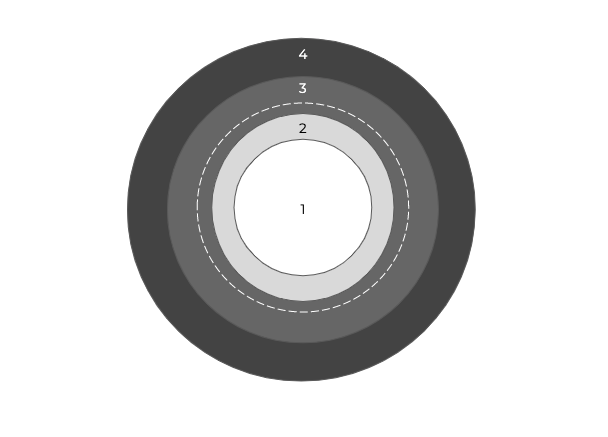
“Consumer contextual value is defined as a metric that can be used by brands to connect with consumers by understanding the consumer’s internal environment, which is composed of the consumer’s demographics and psychographics, and the consumer’s external environment, which is composed of the consumer’s relationship to their local/regional context, their national context, and their international context.”
– From Paris to New York: A cross-cultural comparison of department stores and their ability to deliver contextual value during a global pandemic
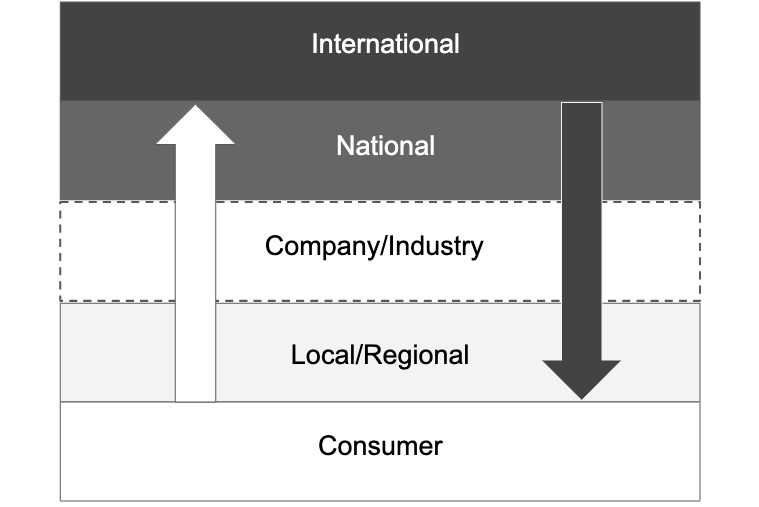
This is what consumer contextual value looks like in illustrated form:
1- Consumer context; 2- Local/Regional context; 3- National context; 4- International context
What’s the circle with the dotted line? The one that floats between the local/regional context (2) and the national context (3)? That is the position of retailers within the consumer context.
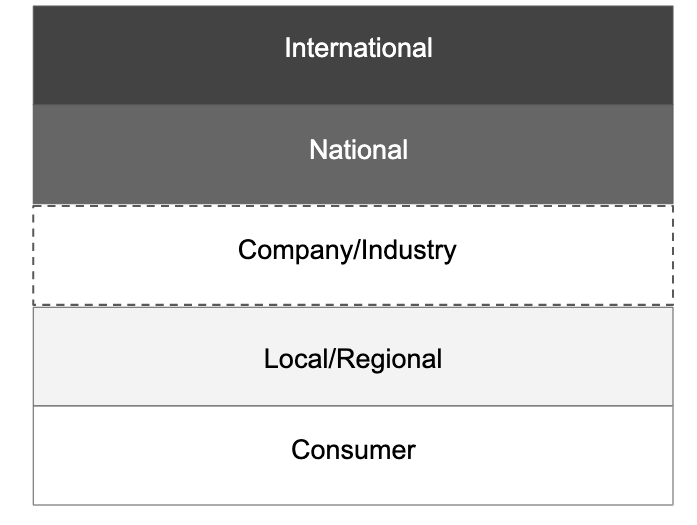
Here’s another illustrated form of the framework:
By examining the consumer’s experience across different lenses, the concept and framework force retailers to face the reality of the world, therefore grounding their sales and marketing strategies with the reality of their consumers in mind.
Personal Example: Millennial Woman
The consumer contextual value looks like a nice concept, but how do we apply it? Before introducing a case study example, I want to provide a simple example to demonstrate the dynamics between the layers of context.
01
Consumer
I am a Millennial woman. I enjoy writing, reading—fashion biographies, historical fiction, and anything set in France—and traveling. I value my relationships with my family and friends. I believe that all human beings should have access to the resources they need to maintain a safe, sustainable quality of life.
02
Local + Regional
I am a Millennial woman living in New England who spends time in Connecticut, Rhode Island, and New York City. The combination of the metropolitan pace and the coastal community is important to my identity.
03
National
I am a Millennial woman living in the United States. Despite the range of national conflicts, I remain hopeful that the United States will overcome these challenges and build a sustainable future for all Americans.
04
International
I am a Millennial American woman. Through travel, relationships, and research, globalization shapes my perspective by influencing the way I perceive my national context, my local + regional context, and my personal context.
In the personal example, notice how each context influences each other. The consumer’s context—their internal environment, their identity, their values—carries through their journey in external environments. In exchange, the external contexts exert their levels of influence on the consumer’s context, which creates a feedback loop.
Why is it important to notice this dynamic as a retailer? The retailer is in the middle, which means that it must pay attention to the feedback loop across contexts.
Fictional Retailer Example: INDIGO + CO and racial justice
A medium-sized contemporary womenswear brand, INDIGO + CO, sells premium denim and casual tops. Based in California, INDIGO + CO proudly integrates sustainability across its supply chain. The company is working towards its B Corp certification.
The brand’s marketing messaging focuses on sustainability and style. The brand’s marketing content predominantly features caucasian, heterosexual women.
BeccA, THE CONSUMER
One of INDIGO + CO’s consumer segments is represented through a persona named Becca. Becca is a caucasian, white Millennial woman who lives in the suburbs and is an associate-level professional. After previously living in the city, Becca is looking for more casual pieces in her wardrobe as she works remote. In terms of styling needs, she wants to be able to wear these casual clothes on date nights and vacations with her friends. She rarely shops from fast-fashion brands in favor of buying higher quality, sustainable clothing. She is highly active on Instagram and Pinterest.
BLACK LIVES MATTER, THE EVENT
In late Spring 2020, there is raised awareness of the Black Lives Matter (BLM) movement across the United States.
Social media is flooded with messaging about BLM and how non-BIPOC can educate themselves about systemic privilege and how to become allies to BIPOC.
Although Becca is not a BIPOC, she is interested in learning more about how to support BLM. She learns that one way to act as an ally is to demand fashion brands to include more BIPOC in marketing campaigns and executive corporate positions. Becca researches INDIGO + CO on Google and realizes that the brand does incorporate diversity on its marketing platforms and its corporate ladder.
Becca reads emails from brands that state their solidarity with BLM. She reads INDIGO + CO’s email statement, but it does not list specific actions to address racial inequality. Regardless of the brand’s promise to support BIPOC, to Becca, the message does not seem authentic. Becca is not sure whether or not she will continue shopping with INDIGO + CO in the future.
How will INDIGO + CO proceed? It depends on their ability to understand the new dimension of their consumer’s context and whether or not they can successfully connect to Becca and their other consumers.
Conclusion
The consumer contextual value framework shows that retailers have the power to build bridges or barriers between their consumers and their external contexts:
Building a bridge allows a brand to connect with the consumer through authentic interactions and relationship building, therefore instilling a stronger sense of loyalty and increased likelihood that the consumers will become advocates.
Building a barrier, however, is problematic. A brand may try to build a wall by constructing an environment that attempts to control the consumer through the brand’s context without consideration of the consumer’s context, but it will ultimately fail because the consumer may freely leave the brand’s restrictive, constructed environment for another brand that resonates more with the consumer’s context. Instead of converting consumers into brand advocates, barriers may create brand adversaries.
– From Paris to New York: A cross-cultural comparison of department stores and their ability to deliver contextual value during a global pandemic
A global event is not the only instance where retailers can use the consumer contextual value framework:
The framework can be scaled to understand a brand’s new target market or simply use it as a monitoring tool to keep track of competitors and industry trends within national and international contexts.
[…] Companies can use the framework as a guiding tool to navigate best practices for their existing consumers as well as how to attract new consumers with an approach that balances brand integrity, authenticity, and the willingness to innovate.
– From Paris to New York: A cross-cultural comparison of department stores and their ability to deliver contextual value during a global pandemic
In June 2020, I earned my master’s degree in International Fashion Marketing (M.S.) at Glasgow Caledonian New York College. The program integrated sustainable business strategy and values-based leadership with digital marketing and fashion branding.
Recent shifts in the fashion industry reflect that retailers must implement sustainable initiatives, as well as embrace diversity and innovation, to survive. Moving forward, it is imperative for retailers to reassess what it means to deliver value for consumers, collaborators and the global community.
My graduate dissertation explores how brands can navigate the consumer’s environment and implement successful fashion marketing strategies.
The study—From Paris to New York: A cross-cultural comparison of department stores and their ability to create contextual value during a global pandemic—compares how Bloomingdale’s and Galeries Lafayette approached their Instagram marketing strategies during temporary store closures caused by COVID-19 in Spring 2020.



 Mia Lupo