A brief education on how COVID-19 has accelerated change in the retail industry in the U.S. and its effects on the lives of retail workers
It’s hard to believe that it’s approaching a year since the outbreak of COVID-19 in the United States began. I remember getting the official furlough notice via email in late March 2020 and the group text messages between coworkers so that we could figure out the unemployment filing process.
In 2018, the U.S. Census Bureau reported that 9.8 million people were employed as retail workers and accounted for 6.3% of the total workforce in the United States.
In 2020, the retail sector laid off or furloughed one-fifth of their workforce between January-April during COVID-19, the global pandemic responsible for economic shutdowns and reduction in overall physical human interaction to reduce the spread of the virus.
Last spring, I was also in the process of completing a master’s degree in International Fashion Marketing, M.S., and drafting my thesis. I didn’t foresee the long-term repercussions of the global pandemic on my job search, so I remained hopeful that I would be able to navigate a career change upon graduation.
My level of persistence to find a new career has not changed—depending on the day, I cannot always say that I remain hopeful.
It’s easy to go off the rails with the discussion of retail workers and the retail industry at large—there’s a lot that needs to be fixed in a broken industry that benefits the select few and disenfranchises most—so I want to focus on the facts and provide an opportunity for professionals outside of the retail industry to understand what’s happening.
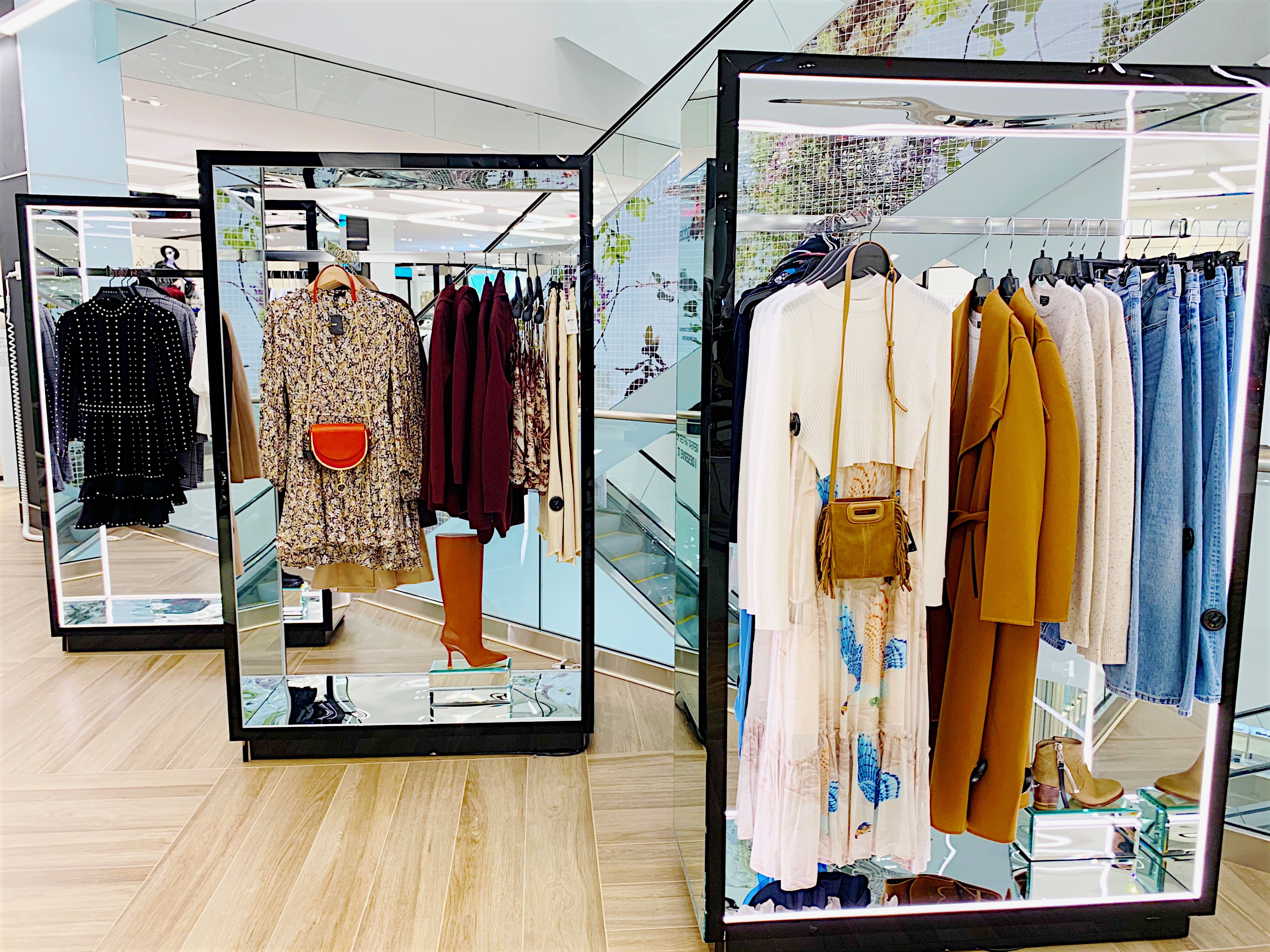
“What, like it’s hard?” → The State of the Retail Industry, Then & Now
Before COVID-19, the future of retail already looked quite bleak for companies who were deeply entrenched in the traditional, empire-like brick-and-mortar retail model and lacked the digital structure to support successful e-commerce strategies. Layoffs and store closures were already happening before 2020—98,563 retail jobs were cut in 2019, outplacement firm Challenger, Gray, and Christmas reported to CNN. Coresight Research reported 9,500 stores went out of business in 2019—the COVID-19 global pandemic accelerated the demise of store networks with over 8,000 store closures in 2020, according to the firm’s statistics shared with MoneyWise.
Sadly, store closures and job losses are inevitable in a world driven by e-commerce and the Internet of Things, then delivered in Amazon Prime speed.
Consumer behavior is changing—not only are customers shopping online, but they’re able to do it while texting and waiting in line at the coffee shop for a cold brew while preparing dinner in the kitchen and kneading sourdough bread dough and calling out to Alexa, and while scrolling through Instagram and purchasing the sponsored loungewear set in one swipe. Options like “buy online, pick-up in-store” (BOPIS) or “ship to store” may increase foot traffic at a store, but it does not guarantee that the customer will make a purchase while picking up their purchases. In a 2019 survey conducted by Statista, 83 percent of respondents tried BOPIS and 27 percent tried curbside pickup.
During COVID-19, the processes and procedures at stores are starting to focus more on supporting e-commerce initiatives, such as processing online returns and fulfilling online orders, than driving in-person experiences.
Retail workers are no longer responsible for only resolving customer issues for in-store purchases—they must also be equipped with the knowledge to resolve e-commerce and shipping issues. This time-suck is merely an annoyance for hourly-wage retail workers, but this is a pure nightmare for commission-based associates in higher-end retail environments such as contemporary brands (i.e. Theory) and luxury department stores (i.e. Bloomingdale’s).
In addition to familiarizing themselves with e-commerce customer service, store networks are challenged when sales and promotions are more compelling online. If the customer sees the website is offering 25 percent off on full-price items, but the store is not running the same offer, the customer is much more likely to purchase online. Even if the store were to honor the online-only offer, why would a customer make a trip to the store when they can make the purchase in an instant on their phone?

“Who Is She?” → Meet the Retail Workforce
Statistics from the U.S. Census Bureau’s Retail Workers: 2018 report confirms that the retail workforce predominantly consists of women and minorities who do not have a higher level of education. Here are a few more facts from the report:
- After grocery stores and club warehouses stores, clothing stores and department stores accounted for nearly 1.3 million jobs
- Women were less likely than men to manage or supervise retail workers. About 47 percent of first-line supervisors of retail workers were women, compared with 53.4 percent who were men.
- Black and Hispanic retail workers were less likely than White retail workers to be in supervisory positions like first-line supervisors of retail sales workers.
The statistics of the retail workforce and retail workers reflect the reality—but few publications are willing to acknowledge the humanity that suffers because of the unequal access to opportunity.
It’s not uncommon for retail workers to have multiple jobs to make ends meet yet they also must have open availability to work at the will of their employer (this long-form article from Racked (RIP) does a beautiful job of illustrating the life of retail workers from different retailers).
Between surviving on low wages, providing customer service for e-commerce issues, managing e-commerce fulfillment for the store, hitting sales goals—and probably having to work another retail job that entails said responsibilities—it is an uphill battle for retail workers to invest time and money in professional development that could help them launch into another career.
As COVID-19 is forcing employees from the service industry to re-evaluate their careers, research published in the Harvard Business Review reveals that the precedent for retail workers to enter a new industry is particularly challenging. The statistics were pulled from Emsi Job Posting and Profile Analytics:
- Out of a total of 10,708 retail workers, 328 (3.1%) moved into accounting and finance by layering on skills in auditing, risk analysis, and compliance; 534 (5.0%) were able to move to human resources; and the largest set of transitions shifted 1,126 retail workers (10.5%) to marketing, advertising, and public relations.
- If these percentages seem low, that’s precisely the point. Relatively few workers have successfully navigated career pivots across domains. Sadly, these shifts tend to reflect labor market exceptions rather than the rule. Workers are charting paths that are idiosyncratic rather than prescriptive.
Like I said earlier—there are some days I’m hopeful about the retail industry than others.
One of the many frustrating things about the layoffs happening in the retail industry right now is that there was formal legislation for auto industry workers to be protected with supplemental income and job retraining. It is difficult for retail organizations to unite and ideate solutions because of high turnover and general instability of the industry (for more articulate research on the lack of legislation surrounding the issue, Time discusses it at length).
The Retail Apocalypse Continues
Research reveals that low-wage workers have been hit the hardest during the COVID-19 pandemic “in part because the industries hardest hit by the pandemic and social distancing measures disproportionately employ low-wage workers.”
The Congressional Budget Office reports that while employed declined by 16 percent overall between February and April 2020, the numbers looked different for specific segments:
- Although employment between February and April [2020] declined by 16 percent overall, it decreased by 31 percent for people ages 16 to 24, by 18 percent for women regardless of age, by 19 percent for people age 25 or older without a bachelor’s degree, and by 21 percent for Hispanic workers regardless of age. Among black workers, employment declined by 18 percent.
- Also, black and Hispanic people constitute a disproportionate share of workers in certain industries in which many jobs involve elevated risks of exposure to COVID-19.
Despite social distancing measures and shutdowns, there are advantages to shopping in-store for clothing. After all, The Business of Fashion and McKinsey’s State of Fashion 2020 report states that 70% of purchases in the fashion category are still made offline.
Having quality products in-stock to attract customers definitely helps the cause to drive foot traffic—so do positive interpersonal connections and excellent customer service provided by retail workers. It becomes more difficult for managers to develop elevated selling skills amongst their staff if initiatives are pivoting towards servicing e-commerce fulfillment.
COVID-19 is exposing the many problems within the retail industry—especially concerning frontline workers who are paid lower wages than their corporate counterparts but taking a higher level of risk for their health—and this is only the tip of the iceberg. There are only more questions that need to be answered, but for now, I want to begin the conversation and raise awareness of how corporations and the government will need to address the labor crisis facing retail workers in the United States and beyond.
 Mia Lupo